
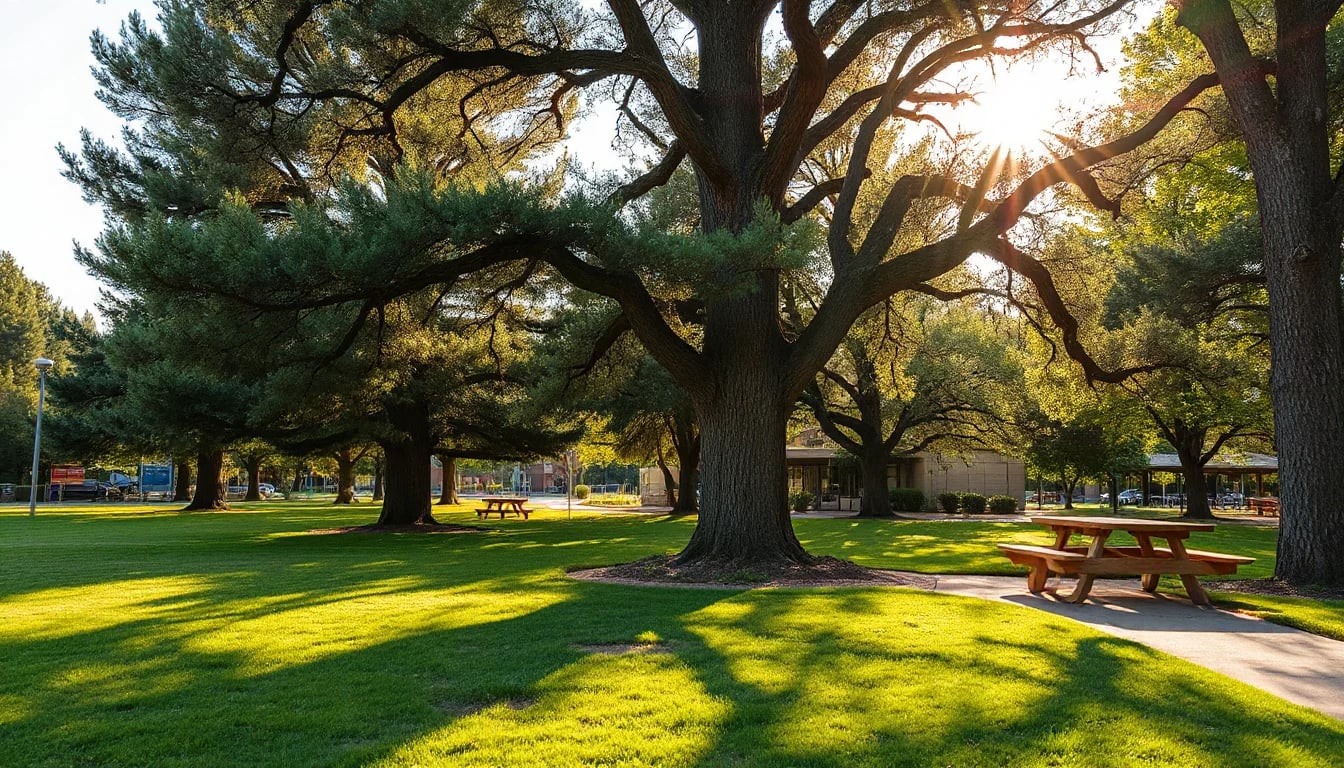
Eagle Mountain offers a practical blend of neighborhood parks, growing trail connections, public-school options, and access to major employment centers across Utah County and the Wasatch Front. Knowing how roads, recreation, school boundaries, and daily travel patterns fit together can help make a home search more informed—and more personal to the way you plan to use your time.
Parks and Open Space Shape the Everyday Rhythm
Eagle Mountain sits on the west side of Utah County, where broad views of the Lake Mountains, Utah Lake basin, and open desert terrain create a distinctly spacious setting. The city’s growth has brought a widening mix of residential neighborhoods, public facilities, paved paths, and recreation areas. For many residents, the appeal is not one single destination but the ability to build outdoor time into an ordinary weekday—an early walk, an evening at a local park, or a quick stop at a playground or sports field.

Community parks throughout Eagle Mountain provide places for walking, casual recreation, organized sports, and outdoor gatherings. Cory Wride Memorial Park is among the city’s recognizable public spaces, with room for play, activity, and community events. Other neighborhood parks and smaller green spaces add variety across the city, so the nearest option may depend on the specific subdivision or street being considered.
When comparing homes, it can be useful to look beyond a map pin. Ask how far a property is from the nearest trail connection, park, recreation area, or public open space—and whether the route is practical on foot, by bicycle, or by car. Sidewalk continuity, street crossings, shade, and terrain can make a noticeable difference in how often an amenity becomes part of a routine.
A park shown nearby on a map may be separated by arterial roads, elevation changes, or unfinished trail links. Visiting at the time of day you expect to use it gives a much clearer picture than distance alone.
Open land is also part of Eagle Mountain’s visual identity. Views and access can vary significantly from one neighborhood to another as development continues. Buyers who value a particular outlook should review current surroundings, planned construction, easements, and municipal development information rather than relying only on older listing photos.
Trails, Terrain, and Recreation Opportunities
The terrain around Eagle Mountain invites exploration, with foothill routes, natural open areas, and local trail systems that can support walking, cycling, and other permitted outdoor activities. Conditions change throughout the year: summer afternoons can be hot and exposed, while winter weather may affect surface conditions and visibility. The most enjoyable outing often starts with a little preparation—water, sun protection, layers, and a route that matches the season.

Local trails and nearby public lands can offer a refreshing counterpoint to the daily commute. Some routes are better suited to a short neighborhood walk, while others may involve natural surfaces, uneven ground, limited shade, or changing access conditions. Before heading out, check current city, county, and land-management guidance for trail status, permitted uses, seasonal closures, and parking availability.
Eagle Mountain’s location also places larger recreation options within reach across Utah County. Utah Lake, the west-side foothills, and destinations toward the Wasatch Front offer different ways to spend time outside, from shoreline scenery to mountain trail systems. The best choice depends on the activity, weather, and how much driving is comfortable for the day.
For a home search, outdoor access is worth considering alongside the house itself. A garage for gear, a mudroom-style entry, an accessible storage area, a shaded patio, or a low-maintenance yard can all influence how easily a household uses nearby recreation. These practical details are especially valuable when a home will serve as the starting point for regular walks, rides, or weekend outings.
Search Eagle Mountain listings
School Information Requires a Boundary-by-Boundary Look
Public school service in Eagle Mountain is generally associated with Alpine School District, one of Utah’s larger districts. School attendance boundaries, available programs, transportation routes, enrollment capacity, and calendar details can change over time, particularly in a growing area. A property’s mailing address, subdivision name, or proximity to a campus should not be treated as confirmation of assignment.
For the most current information, home buyers can verify an address directly with the school district and review official district resources. This is also a useful time to ask about transportation eligibility, before- and after-school programming, special education services, language programs, extracurricular offerings, and any application-based options that may be relevant to a household’s needs.
Private, charter, virtual, and other educational choices may also be available within a broader driving area. Because availability and admissions practices differ, it is best to research each option independently. Keeping school research separate from assumptions about a neighborhood helps buyers focus on confirmed facts and make decisions using information that is current for the address under consideration.
Commute Facts: Routes Matter as Much as Miles
Eagle Mountain is connected to surrounding communities by key road corridors including Pony Express Parkway and State Route 73. Travel patterns often extend toward Lehi, Saratoga Springs, American Fork, Provo, Salt Lake Valley, and other employment centers. The practical commute experience can vary considerably based on the exact neighborhood, destination, shift time, road construction, weather, school schedules, and incidents along the route.
Rather than relying on a single estimated drive time, test the trip at realistic departure and return times. Compare more than one route when possible, and include the final portion of the trip: parking, school drop-off, transit connections, or the drive from an office campus to the freeway can add meaningful time. Remote and hybrid schedules may change the calculation as well, making broadband availability and a functional home workspace important property considerations.
Transit options and park-and-ride connections may be useful for some schedules, but service levels and stop locations should be confirmed directly with the appropriate transit provider. For those who travel frequently, proximity to regional highways and the day-to-day reliability of the preferred route may carry more weight than the straight-line distance shown on a map.
The strongest Eagle Mountain home search is built around real routines. Tour neighborhoods at different times, walk the nearby paths, check current school information, and drive the route that matters most to you. With a clear picture of parks, trails, services, and transportation, it becomes easier to compare properties based on how they support your actual day-to-day priorities.